Irish Pub NYC Spots That Make Visitors Feel Like Regulars
There is a particular kind of welcome that only a good Irish pub can deliver. Not the forced cheer of a place trying too hard to seem friendly, and not the polished indifference you get in bars built mainly for foot traffic. A real Irish pub, especially in New York, knows how to make a newcomer feel less like a customer and more like someone who has simply been away for a while.
That quality matters in a city where many bars are loud, rushed, and transactional. New York can be exhilarating, but it can also make even confident travelers feel anonymous. The best Irish Pub NYC destinations cut through that fast-moving energy. You walk in, take stock of the room, order a pint, and within ten minutes the place has established its terms. Stay a while. Relax. You do not need to perform here.
Some of that feeling comes from design. Some of it comes from staff who know when to chat and when to leave you alone. Most of all, it comes from rhythm. The strongest Irish pubs in New York have a pace that encourages people to settle in. That is what turns a one-time visitor into the kind of guest who feels, by the second round, like they have been stopping by for years.
What makes an Irish pub feel truly local in New York
Anyone can hang a few vintage mirrors, pour Guinness, and put a fiddle tune on the speakers. That does not create belonging. The pubs that succeed at this have a few traits in common, and none of them are superficial.
The first is confidence. A strong pub does not need to explain itself. The room feels lived in, not staged. You notice wood that has aged honestly, barstools that have held thousands of conversations, and bartenders who know the room well enough to keep service moving without looking hurried. There is usually a healthy mix of people inside. Office workers having one pint before the train. Couples sharing a late meal. Solo regulars reading the paper or half-watching a match. Visitors who wandered in because the place looked right from the sidewalk.
The second trait is hospitality without spectacle. In some bars, friendliness feels scripted. In the best Irish pubs, it feels casual and earned. A bartender might steer you toward a better whiskey based on what you already ordered. A server might tell you the shepherd’s pie is selling fast tonight and suggest putting that order in early. These are small acts, but they signal attention. They also lower the invisible barrier that visitors often feel in busy city bars.
The third is restraint. Good pubs do not oversell. They let conversation carry the room. Music supports the atmosphere rather than dominating it. Televisions, if they are on, tend to serve a purpose, especially for rugby, soccer, or GAA, rather than blaring over every interaction. The environment says you are free to have your own evening here.
That is the formula, but every memorable pub expresses it differently.
McSorley’s Old Ale House and the comfort of not changing too much
McSorley’s is an outlier in many ways, but it belongs in this conversation because it demonstrates how powerful continuity can be. It is one of the oldest saloons in the city, and even people who know very little about New York bar history usually know the name. That kind of fame can ruin a place. It can turn a tavern into a museum line with beer. Yet McSorley’s still retains enough of its character to remind people why continuity matters.
Part of the appeal is that the experience is stripped down. You are not handed an elaborate menu of choices and asked to construct a night out. The beer program is famously simple. The room itself does much of the work, with its sawdust-floor mythology, crowded walls, and old New York density. Tourists go, of course, but plenty of locals still go too, and that keeps the balance from tipping too far into novelty.
What makes visitors feel comfortable there is not sentimentality. It is clarity. The house has its own rules, its own rhythm, and its own modest expectations of you. Step in, order, make room for others, and you belong as much as anyone else. Some first-time visitors are surprised by how democratic that feels. No one needs to dress for the room. No one needs insider knowledge. The place asks only that you meet it where it is.
McSorley’s is not the pub for a quiet, hidden corner or a long contemplation over a rare bottle. It can be busy, crowded, and uneven depending on the hour. But if what you want is a deeply rooted New York pub where history still shapes behavior, it earns its place.
The Dead Rabbit proves polish and warmth can coexist
At the other end of the spectrum sits The Dead Rabbit in Lower Manhattan, a place that has become internationally known for its bar program. It would be https://myleshgnt642.scriblorax.com/posts/irish-pub-nyc-nights-music-atmosphere-and-great-company easy for a venue with that level of reputation to drift into self-importance. Instead, one of its enduring strengths is that it still understands pub hospitality.
This is where some visitors hesitate. They hear the acclaim, imagine a room full of cocktail pilgrims, and assume the experience will feel formal or precious. In practice, the pub side has long offered something friendlier and more grounded than that reputation suggests. You can come in because you care about Irish whiskey, because you want a well-poured Guinness, or because you simply need a place with energy and substance after a long walk downtown.
What sets it apart is the precision behind the friendliness. Drinks arrive exactly as they should. The food is usually more thoughtful than standard pub fare, without losing the hearty, satisfying dimension people want in this setting. The staff tend to be quick, informed, and capable of reading a guest accurately. If you want guidance, they provide it. If you already know what you want, they do not slow you down with performance.
That combination matters in a city full of bars that lean too hard in one direction. Some are warm but sloppy. Others are technically excellent but emotionally cold. The Dead Rabbit has managed, at its best, to avoid that split. For a visitor, that means you can enjoy something polished without feeling examined.
Molly’s Shebeen and the value of a room that softens people
Molly’s Shebeen, long associated with Gramercy and the East Village borderland, has the kind of atmosphere that lowers everyone’s shoulders. It is hard to fake that. The room has warmth, helped by details people often remember before they recall what they ordered: dark wood, an old-school pub feel, and the kind of intimate scale that encourages people to lean in rather than compete with the room.
This is one of those places where the phrase “feel like a regular” makes immediate sense. Visitors are not swallowed by the space. That sounds simple, but it is one of the most important design advantages a pub can have. In a massive room, especially in Manhattan, newcomers often feel peripheral. In a pub like Molly’s, the room contains you. Even when it is busy, there is a sense that you are part of a shared interior life rather than floating around its edges.
The food helps too. When a pub serves genuinely comforting fare, it changes the nature of the visit. A good burger, a solid shepherd’s pie, or a satisfying plate of bangers and mash can make a bar feel like a refuge rather than just a stop for drinks. Visitors staying in hotels often underestimate how much they crave that feeling by their second or third day in the city. The best pubs catch that need before the guest can articulate it.
The trade-off is that intimate rooms can feel crowded at peak times, and popular neighborhood pubs sometimes have less flexibility for large groups than visitors expect. But for solo travelers, couples, and small parties, a place like Molly’s demonstrates that scale is part of hospitality.
Landmark Tavern still feels like a neighborhood keepsake
Landmark Tavern in Hell’s Kitchen has one of the qualities that serious pub-goers tend to value most: it feels tied to its block, not merely located on it. That distinction is important. New York is full of bars in convenient places. Fewer bars feel inseparable from the neighborhood around them.
There is something reassuring about a pub that carries itself with a little age and a little patience. Landmark Tavern has long been appreciated for precisely that. It can absorb different kinds of visitors without becoming generic. Theatergoers, neighborhood regulars, out-of-towners staying on the West Side, and workers finishing a shift can all fit into the same room because the pub itself sets the tone.
The welcome in places like this often comes through consistency. The pint is right. The menu is familiar. The room does not pivot wildly depending on trends. When that consistency is paired with competent, personable service, visitors relax quickly because they understand the bargain. The pub is not trying to surprise them. It is trying to take care of them.
That can sound modest, but modesty is underrated in hospitality. Not every memorable bar needs to reinvent the category. Sometimes being reliable, atmospheric, and rooted is exactly what turns a first visit into the start of a habit.
Swift Hibernian Lounge shows how elegance can still feel easy
Swift has long stood out for offering a more refined interpretation of the Irish pub without losing the sociability that defines the category. Its design is sharper, the room more composed, and the drinks program more expansive than what many people expect when they hear “pub.” Yet it still works because elegance alone is not the point.
A place like Swift succeeds when it remembers that people come to pubs for a feeling, not just a product. If the room is beautiful but stiff, the concept fails. What has made it appealing over the years is that it has managed to create a sense of occasion without intimidating the guest. Visitors can stop in for a pint and feel entirely at ease. They can also dig deeper into whiskey or cocktails and feel rewarded rather than upsold.
This matters for travelers who want something a touch more polished after a day in the city but still want a pub’s social ease. New York often forces a choice between dive-bar informality and high-end seriousness. Good Irish pubs can occupy the middle ground brilliantly. Swift is one of the places that has shown how.
In Queens and beyond, the regular feeling often gets even stronger
Manhattan gets most of the attention, but some of the most genuinely welcoming Irish bars in New York sit outside the usual visitor circuit. In parts of Queens and the Bronx, the neighborhood pub remains exactly that, a neighborhood pub first. Visitors who make the trip often notice the difference immediately.
Donovan’s in Woodside is a useful example, not because it tries to act like an old-country pub dropped into New York, but because it feels honest about where it is. It is a New York bar with Irish roots, local loyalty, and a famously satisfying burger that draws people across borough lines. That mix matters. The room does not survive on tourism, so any visitor who comes in is stepping into an existing social ecosystem. Oddly enough, that can make the welcome feel more real.
When a place does not need your approval, any warmth it extends feels authentic. Bartenders in neighborhood bars often have less interest in performance and more interest in keeping the room balanced. If you are respectful, patient, and clear about what you need, they usually meet you halfway quickly. Many seasoned travelers prefer that to the hyper-attentive model common in more tourist-heavy districts.
The downside, of course, is convenience. Not every visitor wants to build an evening around a subway ride to a residential stretch of the city. But if your goal is to understand how the Irish pub tradition actually lives in New York, not just how it is marketed, leaving Manhattan can pay off.
The role of staff, and why the first two minutes matter most
People often talk about ambience as if it exists independently of the staff. It does not. A beautiful room can feel inhospitable within seconds if the greeting is flat, confused, or territorial. By contrast, an average-looking pub can become deeply memorable if the staff know how to receive people.
In Irish pubs that make visitors feel like regulars, the first two minutes tend to unfold smoothly. You are acknowledged. If seating is informal, that is made clear. If the bar is crowded, someone gives you a signal that your turn is noted. If food service is split between sections, you learn that before needing to ask twice. These tiny interactions prevent the self-conscious hovering that makes guests feel out of place.
Experienced pub staff also understand calibration. Some travelers want conversation. Others want a quiet pint and a newspaper or phone for company. Some know stout; some do not. The art lies in sensing the difference quickly. In the best places, guidance is offered without condescension. That is rarer than it should be.
I have always thought a proper pub reveals itself most clearly in how it treats the solo guest. A lone visitor at the bar is a test of a room’s character. In a good pub, solo drinkers are neither ignored nor recruited into awkward banter. They are given the dignity of choice. If conversation happens, it happens naturally. If not, they are still made comfortable. That is regular-level hospitality.
What to order if you want to understand the place
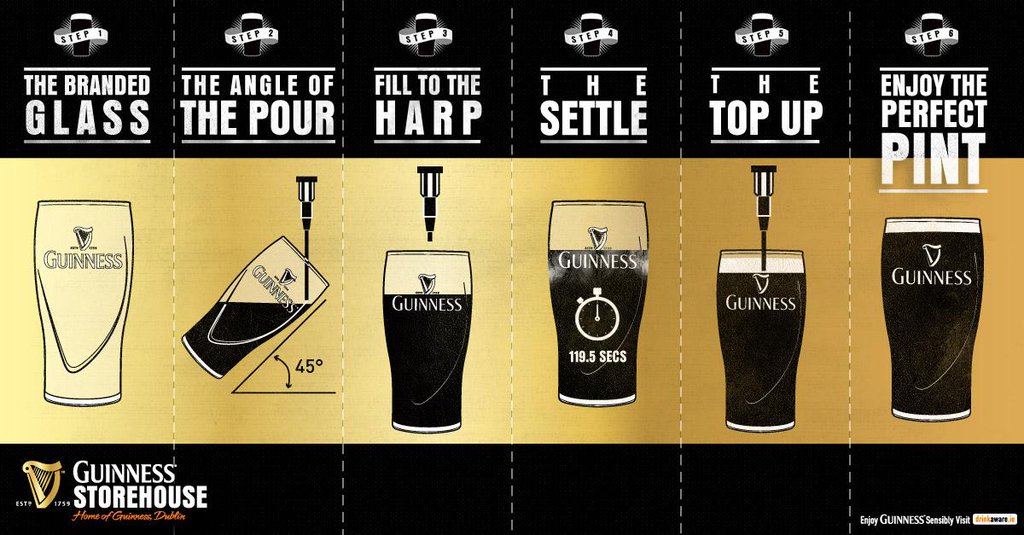
You do not have to overthink the menu in a good Irish pub, but your order can tell you a lot about the house. Guinness is the obvious benchmark, though people often turn that into mysticism. A well-kept pint matters, but the real test is broader. Does the bar handle volume without rushing? Is the glassware clean? Is the pour consistent? Does the staff serve with quiet confidence or fuss unnecessarily?
Food can be even more revealing. Pub staples are harder to execute well than they appear. Shepherd’s pie should have depth, not just heat and salt. Fish and chips should be crisp and fresh, not heavy from stale fryer oil. Brown bread, soup, sausages, or a straightforward burger all tell you whether the kitchen respects simple things.
Whiskey programs deserve attention too, especially in a city where some bars stock Irish bottles mainly as a branding gesture. A worthwhile pub does not need a huge list, but it should have a thoughtful one. More important, the staff should know what is on it. If you say you usually drink Redbreast, Powers, or Jameson Black Barrel, someone competent should be able to steer you from there.
None of this requires snobbery. In fact, snobbery is the enemy of the pub experience. The point is not to audit the place. The point is to notice whether the fundamentals are strong. When they are, the room becomes trustworthy.
Timing changes the experience more than most visitors realize
Many Irish pubs in New York feel like entirely different places depending on the hour. Mid-afternoon can reveal the room itself, the service style, and the habits of actual regulars. Early evening brings a healthy hum and often the best balance between energy and access. Late night can be wonderful in the right pub, but it can also flatten distinctions, especially in busy areas where crowds arrive all at once.
Visitors who want that regular feeling should avoid peak crush hours on a first visit when possible. Arrive a little earlier than the main rush. Sit at the bar if you can. Order a drink you actually want, not one you think suits the room. Ask one genuine question if you have one, then let the place come to you. Pubs reward patience.
That is one reason so many seasoned New Yorkers end up with favorite windows for certain bars. A pub that feels overwhelmed at 6:30 on Friday may be close to perfect at 4:15 on Thursday. The bones of the place do not change, but your access to them does.
Why the best Irish Pub NYC experiences stay with people
People rarely remember a great pub solely because the beer was cold or the building was old. They remember how the place handled them. They remember being tired, underdressed, a little uncertain, and then realizing none of that mattered. They remember a bartender who looked up at the right moment, a server who treated a single diner with the same care as a four-top, a corner stool that opened up just when they needed it.
That is why the phrase “feel like a regular” has real meaning in this context. It does not mean pretending you belong to a community you just met. It means entering a room organized around familiar human instincts: feed people well, pour properly, speak plainly, and keep the atmosphere generous enough that strangers can settle into it.
New York is not always generous on the surface. Its pace can hide the softer parts of city life. The best Irish pubs preserve those softer parts without becoming sentimental. They offer structure, warmth, and a little breathing room. For visitors, that can be the difference between finding another bar and finding a place they talk about long after the trip ends.
If you are looking for an Irish Pub NYC experience that goes beyond themed décor and loud weekend crowds, look for the places where the room seems to exhale when you enter. The right pub will not ask you to earn your comfort. It will simply make space for it.
Hibernia Bar
401 W 50th St
New York, NY 10019, United States
Phone: +1 212-969-9703
FAQ About Irish Pub NYC
What is the best Irish pub in NYC?
The best choice depends on your location and preferred atmosphere. Hibernia Bar is a neighborhood Irish pub in Hell's Kitchen offering Guinness, Irish whiskey, pub food, and sports viewing.
Where do Irish people go in NYC?
New York's Irish community gathers in many neighborhoods and venues. Hibernia Bar welcomes Irish expats, local residents, and visitors at 401 W 50th St, just off Ninth Avenue.
Where can I watch GAA games in New York?
Hibernia Bar lists GAA among the sports it shows. Call +1 212-969-9703 to confirm coverage and opening times for a particular match before visiting.
What is the difference between a bar and a sports bar?
A sports bar emphasizes televised games and a shared viewing atmosphere. Hibernia combines sports viewing with the food, drinks, and hospitality of a neighborhood Irish pub.